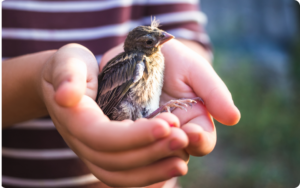
Baby Birds
If baby birds are injured or in imminent danger, contact a licensed wildlife rehabilitator. If featherless or nearly featherless baby birds have fallen from their nest but appear unharmed, put them back in the nest if you can do so without danger to yourself. (It is a myth that birds will abandon their young if a person touches them.)
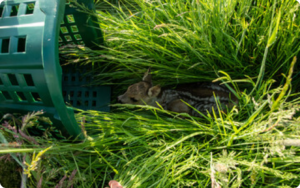
Baby Deers
People often mistakenly assume that a fawn (baby deer) found alone is orphaned. If the fawn is lying down calmly and quietly, their mother is likely nearby and they are OK. Mothers visit their fawns a few times a day to avoid attracting predators. Unless you know that the mother is dead, leave the fawn alone.
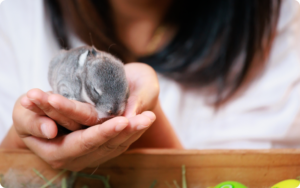
Baby Rabbits
Rabbits at least four inches long with open eyes and erect ears and who hop well are independent of their mother and should be allowed to fend for themselves. Uninjured baby rabbits in an intact nest should also be left alone. Although they might look abandoned because their mother isn’t around, mother rabbits visit their dependent young only a few times a day to avoid attracting predators.
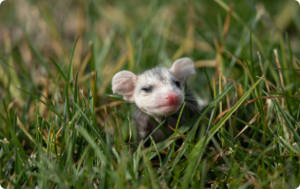
Baby Opossums
Baby Opossums are born as embryos, barely larger than a bee, and spend about two months nursing in their mother’s pouch. When they get to be about three to four inches long and start riding around on their mother’s back, they may fall off without the mother noticing. If they’re less than seven inches long (not including the tail), they are orphaned and you should contact a licensed wildlife rehabilitator.
Baby Squirrels
A squirrel who is nearly full-sized has a full and fluffy tail and can run, jump, and climb independently. However, if a juvenile squirrel continuously approaches and follows people, their mom is probably gone. In this case, you should contact a rehabilitator because the baby is very hungry and needs care.
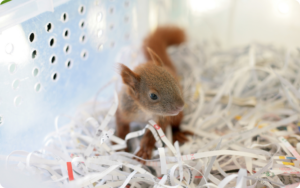
Baby Raccoons
If a baby raccoon has been alone for more than a few hours, they are probably an orphan. Mother raccoons don’t let their young out of their sight for long. Put an inverted laundry basket over the baby (with a lightweight on top so they cannot push their way out) and monitor them until well into the nighttime hours (raccoons are nocturnal, so mom should come out to reclaim her baby).
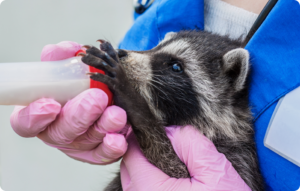
Baby Foxes
Fox kits will often appear unsupervised for long periods while their parents are out hunting for food. Observe the kits from a distance; if they seem energetic and healthy, leave them alone. If they appear sickly or weak, or if you have reason to believe both parents are dead, contact a licensed wildlife rehabilitator.
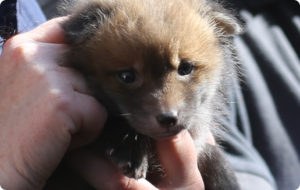
Baby Skunks
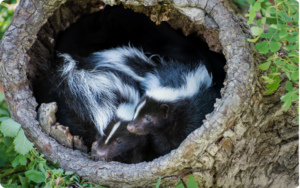
If you see a baby skunk (or a line of baby skunks, nose-to-tail) running around without a mother in sight, they could be orphaned. Skunks have poor eyesight, so if something scares the mother and they run off, the babies can quickly lose sight of them.
For more information on Orphaned or Injured Baby Wild Animals, go to https://www.humanesociety.org/resources/found-orphaned-or-injured-baby-wild-animal